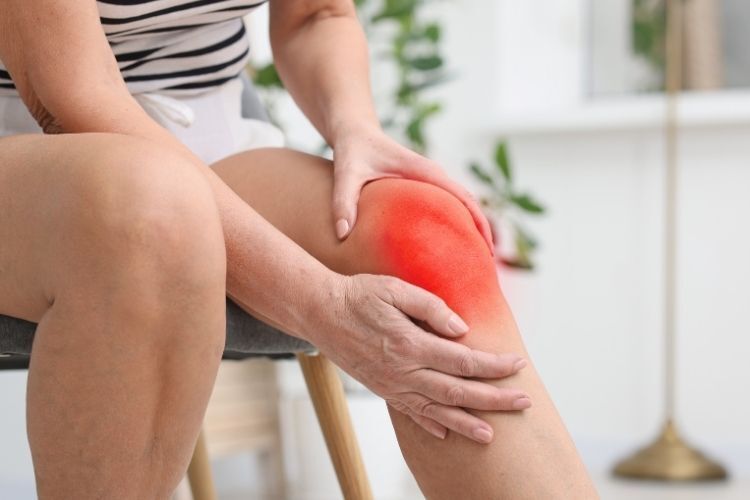
If the front of your knee looks puffy, kneeling feels like pressing on a bruise, or stairs have become a daily negotiation, you may be dealing with knee bursitis. Bursitis in the knee happens when a bursa, a small fluid-filled cushion that helps tendons and skin glide smoothly over bone, becomes irritated and swollen.
The good news is that it is common, usually very treatable, and often responds well to the right mix of activity changes and physiotherapy. Below, we cover the types, causes, symptoms, and recovery time, plus what you can do to get moving comfortably again.
What Is Knee Bursitis?
Your knee contains several bursae, which act like tiny cushions between bone and the tendons, ligaments, and skin that move over it. When one is overloaded or injured, it produces extra fluid and swells. It can come on suddenly after a fall or build slowly after weeks of repeated stress.
Types of Knee Bursitis
Where you feel it tells you which bursa is involved:
- Prepatellar bursitis sits at the front of the kneecap and is common in people who kneel often, such as gardeners, tilers, and plumbers.
- Infrapatellar bursitis develops just below the kneecap, near the patellar tendon.
- Pes anserine bursitis causes pain on the inner knee, a few centimetres below the joint line. It is often seen in runners, cyclists, and people with osteoarthritis.
- Suprapatellar bursitis appears above the kneecap and often follows a direct blow or heavy quadriceps use.
What Causes Knee Bursitis?
Most cases trace back to one of a handful of triggers:
- Repeated kneeling. Pressure on a hard surface is the classic cause of bursitis at the front of the knee.
- A direct blow or fall. Landing on the knee can irritate the bursa right away.
- Overuse. Running, cycling, jumping, or a sudden jump in training volume can overload the bursae on the inner and outer knee.
- Movement and muscle factors. Weak hip muscles, tight hamstrings or quadriceps, and poor foot mechanics change how load travels through the knee.
- Arthritis and gout. Inflammatory conditions make the bursae more likely to flare.
- Infection. Bacteria can enter through a cut or scrape over the kneecap, which leads to septic bursitis.
Often more than one factor is involved, which is why a thorough assessment matters more than treating the swelling alone.
Knee Bursitis Symptoms: What Does It Look Like?
Symptoms vary by bursa, but most people notice a few consistent signs. Swelling is the big one, and at the front of the knee it can look like a soft egg sitting on the kneecap. The area may feel warm, tender, and stiff after sitting. Pain tends to spike with kneeling, climbing stairs, squatting, or rising from a low chair. With pes anserine bursitis, inner knee pain is often worse at night or when you roll onto that side.
Bursitis can resemble a meniscus irritation, a ligament sprain, or an osteoarthritis flare. That overlap is one reason a hands-on assessment is worth having before you start guessing at exercises.
Septic Bursitis in the Knee: When to Get Urgent Care
Most cases are not infected, but septic bursitis in the knee needs prompt medical attention. Seek same-day care if the knee is red, hot, and swelling quickly, if you have a fever or chills, or if there is a wound over the kneecap. The NHS bursitis guide and Mayo Clinic both outline warning signs worth knowing.
How Long Does Knee Bursitis Last?
Mild cases often settle within a couple of weeks once the irritating activity is removed. Bursitis that has been building for months, keeps returning, or sits alongside tight muscles and weak hips can take six to eight weeks or longer. Addressing the cause, not just the swelling, gives you the best chance of keeping it from coming back.
Knee Bursitis Treatment: What Helps at Home
In the first days, the goal is to calm the bursa down.
- Offload the knee. Avoid kneeling and deep bending, and use a cushioned pad if your work requires kneeling.
- Ice and compression. Ten to fifteen minutes of ice a few times a day can ease swelling, and a soft compression sleeve may add comfort. A knee brace for bursitis can help during a flare, but it does not fix the underlying cause.
- Medication questions. Ask your pharmacist or doctor whether an anti-inflammatory is appropriate for you.
Many people ask, "is walking good for knee bursitis?" Short, flat walks are usually fine if they do not increase swelling or leave the knee more painful the next day. If they do, cut back and build up gradually.
Knee Bursitis Exercises: What to Do and What to Avoid
Once the sharp irritation settles, gentle movement keeps the knee from stiffening. Common early options include heel slides, quad sets, straight leg raises, side-lying hip abduction, and glute bridges.
Knowing which exercises to avoid is just as useful. Deep squats, lunges, kneeling movements, step-downs, hill running, and high-impact jumping can keep the bursa irritated, so hold off until swelling has eased. Your physiotherapist can show you when and how to bring them back.
Knee Bursitis Treatment With Physiotherapy in Edmonton
Physiotherapy goes after the reasons the bursa became irritated in the first place. A thorough assessment separates bursitis from other knee problems, then builds a plan that may include:
- Hands-on treatment. Manual therapy and soft tissue work for the quadriceps, hamstrings, and outer thigh can reduce tension pulling on the knee.
- Targeted strengthening. Building hip, thigh, and calf strength spreads load more evenly, so the bursa is no longer the weak link.
- Load management. A practical plan for work, sport, and training lets you recover without losing all your fitness.
- Gunn IMS. Where irritable, shortened muscles around the knee keep adding pressure, Gunn IMS physiotherapy may be added. It targets the surrounding muscles, not the bursa itself, and differs from standard dry needling because of the additional certification behind it.
At Thrive Therapy Clinic in South Edmonton, physiotherapy appointments run 45 to 60 minutes, one on one, in a private treatment room. That unhurried time allows a careful look at the knee, hip, and foot together. Jen Kiesman, PT, BScPT, CGIMS, a co-owner with more than 20 years of clinical experience, and Susan Wilkinson, PT, BScPT, CGIMS, FCAMPT, with more than 25 years, are part of our broader physiotherapy team. We welcome patients from Windermere, Summerside, Mill Woods, and across South Edmonton who want knee physiotherapy.
When to Book for Knee Pain Relief in Edmonton
If swelling has lasted more than a week or two, if kneeling and stairs keep triggering flares, or if you are not sure whether it is bursitis at all, get assessed sooner rather than later. Early treatment helps stop an irritated bursa from becoming a long-running problem.
Knee bursitis is uncomfortable, but it is rarely permanent. With the right plan, most people get back to kneeling, climbing stairs, and training without a second thought. If you are ready for answers, book a physiotherapy appointment at Thrive Therapy Clinic and take the first step toward moving freely again.